



JOURNEY
A student’s PhD journey begins with the application process. Students will apply to join CODEX with a Research Project proposal that maps out their intended research and must demonstrate their ability to engage in substantial research activity for the duration of their enrolment.
A research project proposal will typically be no longer than 4 x A4 pages (Arial 11 point font), and include:
- Research Project Title
- Outline of the general topic or area of research;
- Explanation of key terms and references;
- Indicative research questions or identification of the problem;
- The disciplinary field or fields in which the research will contribute to;
- The context and disciplinary field(s) in which the research sits;
- The significance and potential impact of the research;
- Proposed research methodology and why (ie, how this will answer your research questions);
- References and identification of relevant literature, practitioners, and influential works.
- A portfolio representing relevant creative skills and practice.
This infrastructure underpins students’ research training and provides a critical awareness of different interdisciplinary methodological approaches and ethics. The training ensures they are able to:
- Plan an appropriate research project and apply effective project management, setting of research goals, milestones and prioritisation of activities;
- Demonstrate a critical understanding of relevant research methodologies and techniques as well as their appropriate application within your research field, using appropriate library, bibliography and IT skills;
- Summarise, document, report and reflect on research progress through appropriate modes of communication;
- Demonstrate self-awareness, motivation and the ability to identify personal development and training needs;
- Research, record, author, present, disseminate and archive research activities.
Critically, methods training will synthesise a broad range of methodologies from pertinent disciplines. This will enhance students’ research and nurture new transdisciplinary perspectives and collaborations. This type of training also amplifies research impact by ensuring heightened disciplinary literacy and articulation.
Students also engage with the generic training provision provided for Arts & Humanities students at the University of Plymouth delivered through the School of Art, Design and Architecture and Doctoral College.
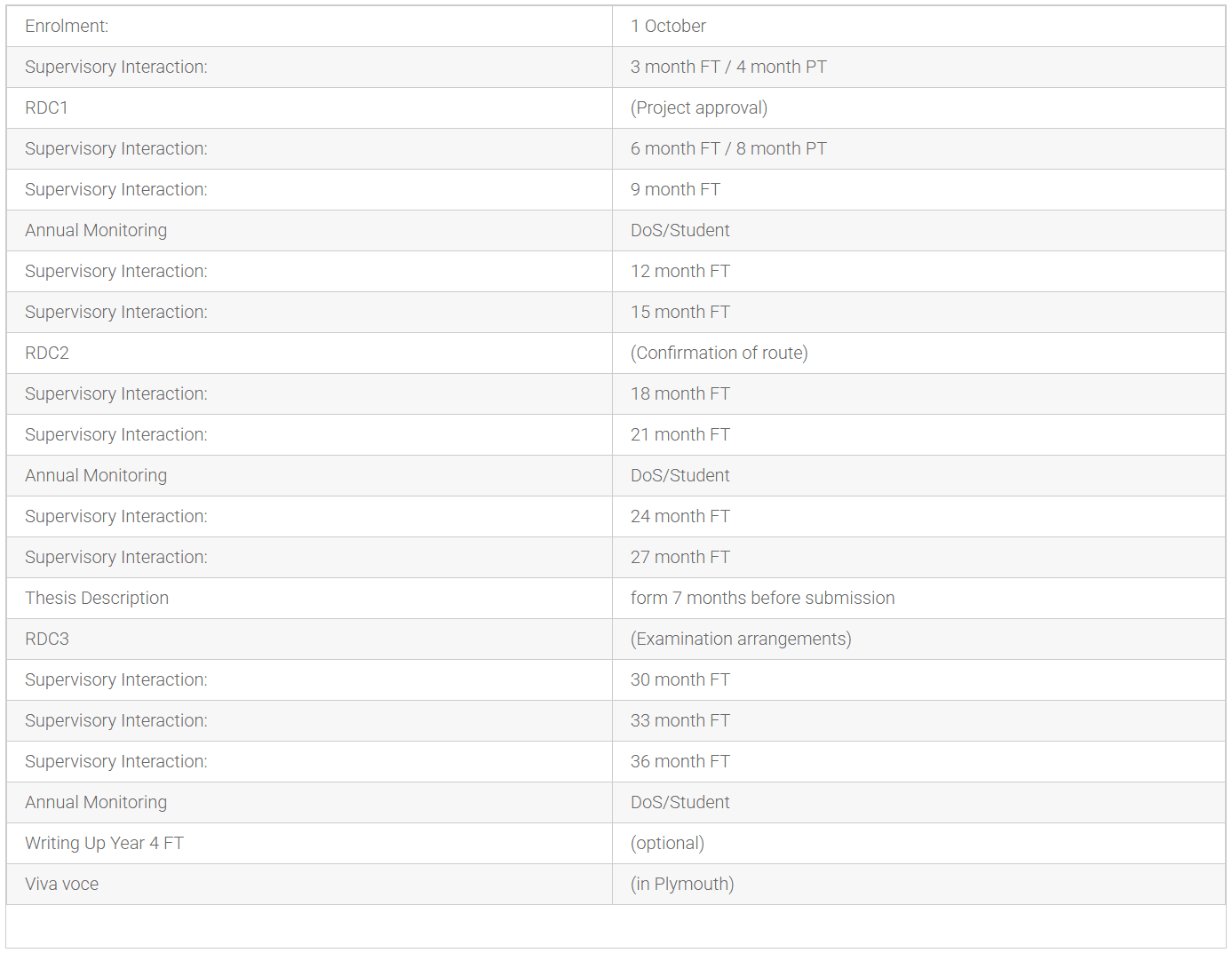
Full-Time students and their supervisory team will be required to meet at least four times per year as stipulated in the University’s Research Degrees Handbook.
Normally these meetings will coincide with the CODEX Composite Sessions and tutorials, and supplemented through the CODEX Link. CODEX Composite Sessions and tutorials will include the assessment of research progress, research planning, and a review of personal skills development and public outputs of the research programme.
CODEX students follow the normal University of Plymouth Doctoral College procedures that include:
- Reporting on the progress of the research to the whole supervisory team at agreed and determined intervals between the student and the supervisors in accordance with the University’s logbook system (recorded in GradBook), but at least once every 4 months.
- Project Approval process (RDC1) in their first year of study (at 6 months of registration for Full Time) where an expert third party commentator who is not a member of that Student’s supervisory team would be assessing the academic content and quality of the proposed programme of work to ensure that it is set at the appropriate level and achievable within the timeframe provided.
- Confirmation of Route process (RDC2) in their second year of study (at 18 months of registration for Full Time students), a similar process to the RDC1 but with the aim (on successful conclusion) of student’s status transferring from an MPhil to a PhD.
- Subject to a Student’s satisfactory annual progress after the transfer to a PhD programme, submission of a thesis in English and satisfactory examination performance, CODEX Students will be eligible for the award of a PhD. Alternatively, Students may wish to submit for the MPhil award.
- A viva voce examination will take place on the University of Plymouth campus. The University of Plymouth will appoint an internal examiner and an external examiner (as nominated by the supervisory team) for each Student.
Schedule:
Post-Doc/Practitioners:
CODEX also supports Post-Doctoral researchers and professional artists and designers in residence.